
Quality & Incoming Goods Inspection for Industrial & MRO Parts
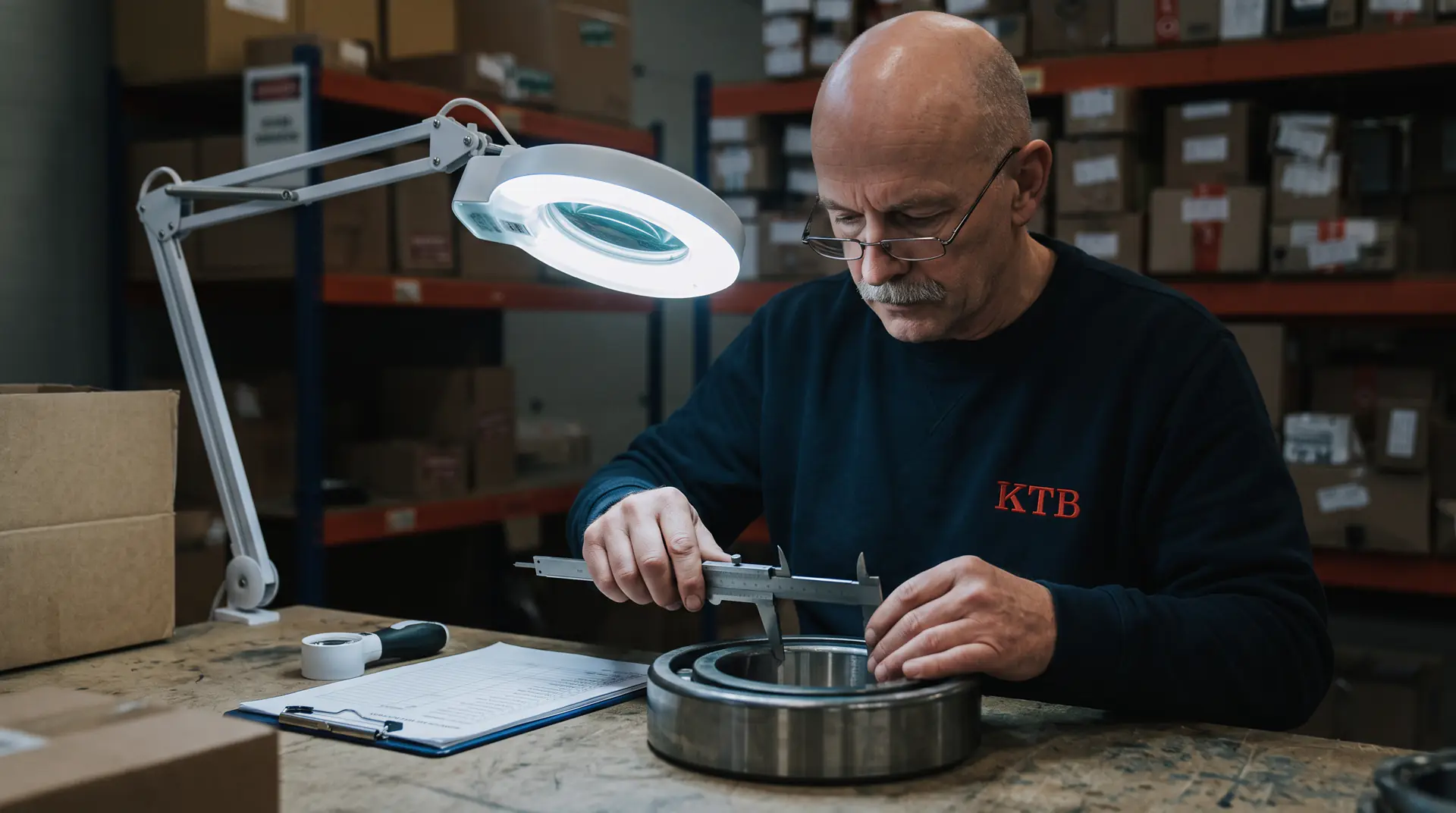
Quality and quantity of direct and indirect goods are checked by our KTB employees in our own central warehouse. Each spare part is carefully controlled and consolidated for collective deliveries to customers.
On-site inspection of MRO spare parts
Trading in MRO goods requires precise timing and full reliability in quality assurance. In our KTB central warehouses, every delivery is checked for completeness and quality to rule out time-consuming complaints. We then ensure that all spare parts are packed and shipped according to international standards such as ISPM 15. When it comes to purchasing spare parts, we take it very seriously: inspection and assurance of export-compatible standards is part of the service at KTB.

Tested, secured, packaged: MRO parts from KTB are guaranteed to reach customers in top condition
KTB draws on over 45 years of experience in the field of industrial foreign trade for in-house inspections. Our employees are very familiar with a wide range of materials and special technical parts and ensure that exactly the right industrial parts arrive at the customer.
The KTB quality promise at a glance: Inspections in our own warehouse
- We inspect incoming goods carefully before delivery to customers. We pay attention to quality, quantity and export packing.
- Each product is marked, labeled and released by experienced inspectors in the KTB warehouse.
- Technical ambiguities will be clarified with respective manufacturers prior to deployment.
- Reduction of the complaint rate for customers and manufacturers
- Our secure export packaging meets international standards and protects MRO goods on their way to the customer.
Frequently Asked Questions
What does KTB check during quality inspection of industrial and MRO parts?
KTB checks incoming goods in its central warehouses for completeness and quality, labels and marks them, and releases each product through experienced inspectors. An incoming-goods inspection generally covers a target-versus-actual comparison, a visual check and documentation, so only sound parts enter the onward supply chain.
When does the incoming goods inspection take place?
The inspection takes place after goods arrive at the central warehouses, before parts are made ready for dispatch to the customer. Positioning it before onward shipment is generally sensible, as deviations are caught while goods are still held centrally rather than already at the customer.
What happens if there are technical uncertainties about a part?
KTB clarifies technical ambiguities with the relevant manufacturer before release, so only sound parts move on. Checking back with the manufacturer is generally the correct route to settle a technical part specification, suitability or documentation before it is installed.
Why is an inspection before shipment worthwhile?
The pre-dispatch inspection aims to avoid complaints, and secure export packaging protects MRO goods on their way to the customer. Early checking and transport-appropriate packaging are generally established means to reduce transit damage and incorrect deliveries, especially on long international routes.
Which packaging standards does KTB use for export?
KTB secure export packaging meets international standards and protects MRO goods in transit. For wooden packaging in international trade, the ISPM 15 standard generally applies, requiring treatment of packaging wood to prevent the spread of pests.
Our Services
As a specialized provider, we ensure smooth processing with high service quality.